Neurology Residency
Neurology Residency Overview
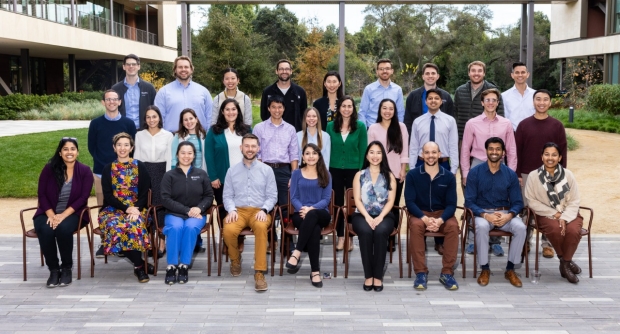
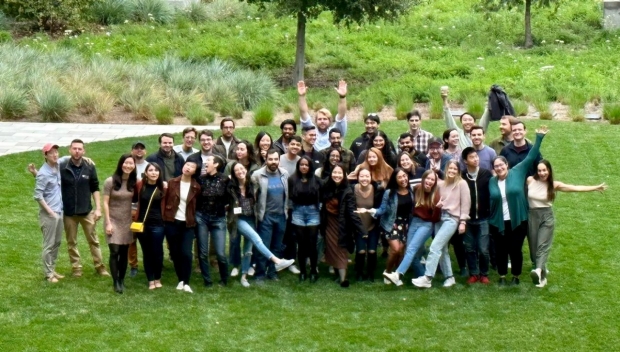
Welcome to Stanford Neurology! We are committed to building a community of leaders in neurology with an emphasis on compassion, clinical excellence, innovative scholarship, and career development. Please explore the neurology resident website, as well as the website for our Neurology Department and our many divisions and programs. Thank you for taking the time to learn about what our residency training program has to offer.
A culture of mentorship and early career development
Stanford Neurology’s open-door policy and culture allows for strong mentor relationships to develop at any point in training. We have formal programs with each resident selecting an official professional development mentor as well as scholarship mentor. Each resident will additionally be assigned a 1:1 Communications coach. We cultivate our residents’ passions to find the unique ways in which they will contribute as leaders in Neurology. We are proud of our graduates across the nation who are directors, departmental leaders, and innovators in their areas of interest.
Breadth of scholarship and research exposure during residency
Our residents will select a mentored area of scholarship, typically in the neurosciences, medical education, or quality improvement. Many residents have successfully developed innovative projects that are a launching point for their career.
Neuroscience Research: All residents are exposed to our research curriculum and will have opportunities to engage with the physician scientist community at Stanford. Those residents particularly interested in a research career may apply for the department’s Neuroscience Scholar Track and be awarded 6 blocks (i.e. 24 weeks) of mentored research time. As part of our commitment to career development, those future physician scientists applying to residency may consider the Investigator Training Pipeline (ITP) and interview for a 2-year research-focused fellowship in their chosen area at the same time as the residency interview.
Education: All residents become skilled educators during residency and have opportunities to pursue advanced professional development at the Stanford Faculty Development Center (SFDC) for Medical Teachers, Stanford Medicine Teaching and Mentoring Academy, and/or Stanford Health Professions Education and Scholarship; residents have the opportunity to earn an honors certificate in medical education through this program.
Quality improvement: All residents gain experience in QI methodology and systems improvement. A novel formal curriculum has been designed to give our Neurology residents hands-on experience and the tools necessary to solve real-world problems within a complex healthcare system. Our monthly morbidity, mortality, and improvement conference is a popular launching point for multidisciplinary projects that result in national conference presentation and publication, along with innovative change to improve neurological care. Read more here about projects highlighted at the annual QI symposium.
An optimal balance of inpatient/outpatient experience
Our program balances inpatient and outpatient experiences to best reflect daily practice of most neurologists. We believe this to be unique feature of Stanford compared to other top academic neurology training programs. Residents spend at least 7 months rotating through subspecialty clinics at Stanford Neuroscience Health Center. These clinics include Dementia/Behavioral Neurology, Epilepsy, Multiple Sclerosis/Neuroimmunology, Movement Disorders, Neuromuscular, Neuro-oncology, Headache, Stroke, and Autonomic. Additional general neurology clinic experiences come from weekly Resident Continuity Clinic over three years, and rotations through our other training sites: Santa Clara Valley Medical Center, Palo Alto VA Hospital, and Lucille Packard Children’s Hospital.
A sample schedule can be seen here:
| SHC Inpt | County | VA | LPCH/Psych | Outpt/Elective | Vacation | ||
| PGY2 | 5 | 2 | 1 | 4 | 1 | 13 | |
| PGY3 | 3.5 | 3 | 5.5 | 1 | 13 | ||
| PGY4 | 3 | 1.5 | 1 | 1 | 5.5 | 1 | 13 |
Personalized and flexible training
We provide as much flexibility as possible for our residents to pursue their interests. Residents each have approximately 10 blocks of flexible elective time over the course of their three years. This is in addition to four weeks of vacation per year, of which one week will guaranteed during the Winter Holiday season. Electives provide time for intensive exposure to neurology subspecialties or research, and facilitates individualized career development during residency training. Click here to view a list of common electives and their syllabi. Residents can also create their own electives or work on their scholarly activity. Off-site electives, including global health, are possible with special arrangement. Select residents will apply for up to six continuous blocks of dedicated neuroscience research time.
Continuous educational exposure
Our residency program strives to maintain a rich environment for education. There is a Morning Report four days/week, an “Educational Half-Day” every Wednesday afternoon, and Neurology Grand Rounds each Friday morning. There are also optional subspecialty conferences in epilepsy, stroke, neuromuscular diseases, clinical neurophysiology, tumor board, child neurology, etc. Basic science conferences at Stanford are given by the world’s best, literally the “who’s who” in modern neuroscience.
A steadfast commitment to diversity and inclusion
The San Francisco Bay Area is one of the most diverse areas within the United States. At Stanford Neurology, we strongly believe in the value of diversity in our training program and our community. Residents see a tremendously diverse patient population through our four phenomenal teaching hospitals. We encourage individuals from diverse backgrounds to apply Learn more at Diversity and Inclusion.
An innovative approach to wellness
We take great care of our residents and are deeply aware of the importance of building resilience in the face of research exposing the risks of burnout amongst physicians, including neurologists, nationally. Stanford Neurology has innovated a robust well-being program for our trainees that is one of the first in the country and presented at the AMA International Conference on Physician Health. Learn more about our Neurology Wellness and Mentorship Program.

Nirali Vora, MD
Program Director,
Neurology Residency
Clinical Professor of Neurology and Neurological Sciences
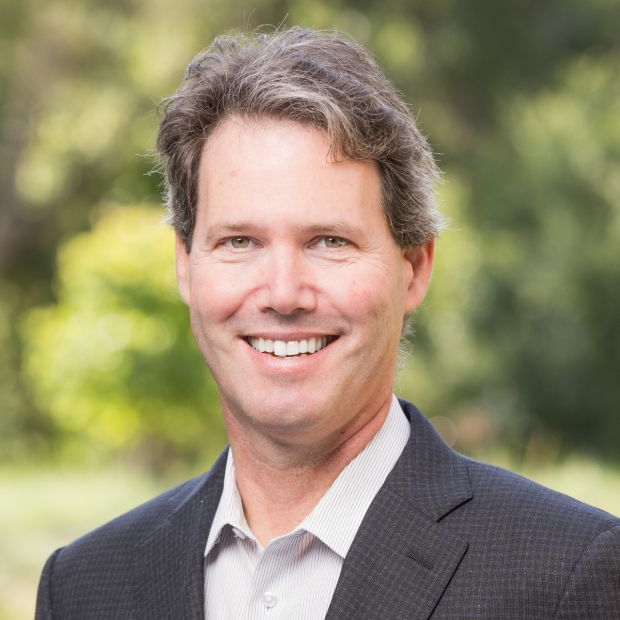
Neil Schwartz, MD, PhD
Associate Program Director,
Neurology Residency
Clinical Professor of Neurology and Neurological Sciences
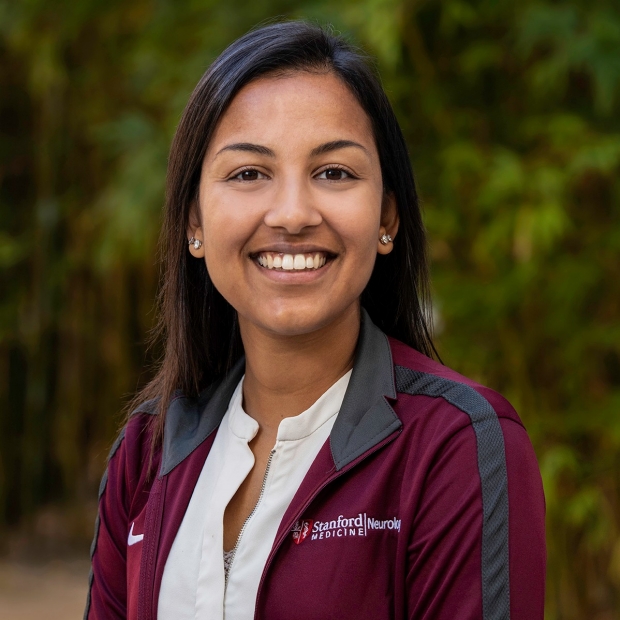
Shefali Dujari, MD
Assistant Program Director,
Neurology Residency
Clinical Assistant Professor of Neurology and Neurological Sciences
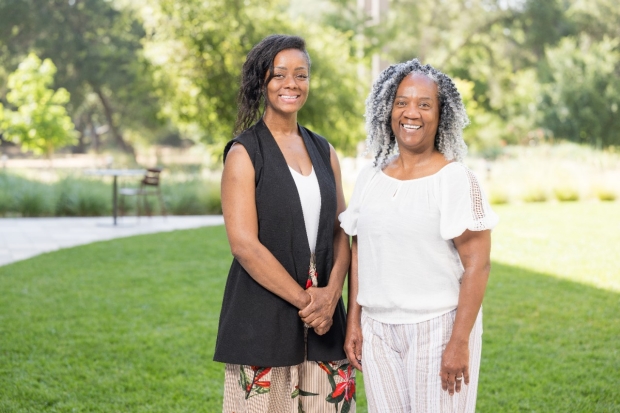
Mitzine Wright & Christina Sabathia-Carter
Residency Program Coordinators
Neurology & Neurological Sciences